Clinic access is not frictionless
Traditional testing can create direct and indirect costs for patients and providers.
Android-first hearing screening · pre-seed
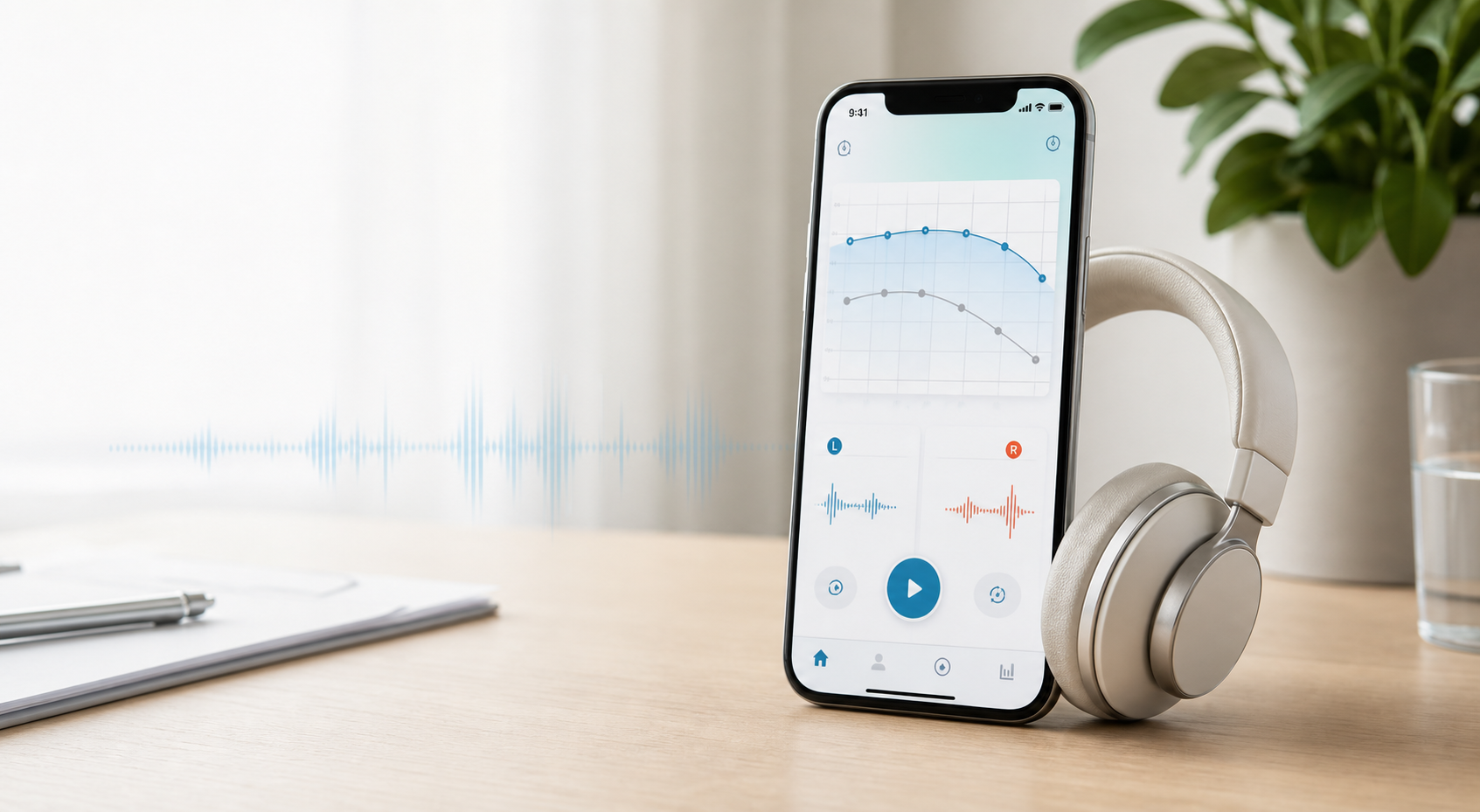
EZTON enables fast hearing screening on supported smartphones using consumer headphones. The experience combines elements of traditional hearing testing with speech-in-noise assessment, tinnitus characterization, audiogram-style reporting, and referral guidance when further clinical evaluation may be appropriate.
The gap
Formal tests usually require a hearing clinic, dedicated equipment, and trained specialists. Smartphone apps are easier to access, but many users and providers still question whether consumer-device results are reliable enough to guide the next step.
Traditional testing can create direct and indirect costs for patients and providers.
Specialist capacity and appointment logistics can push assessment later than it should be.
Convenience alone is not enough if results are hard to interpret or compare.
Public version note: detailed market figures, clinic economics, and source-backed operating data should be shared in a private investor deck or data room.
Product
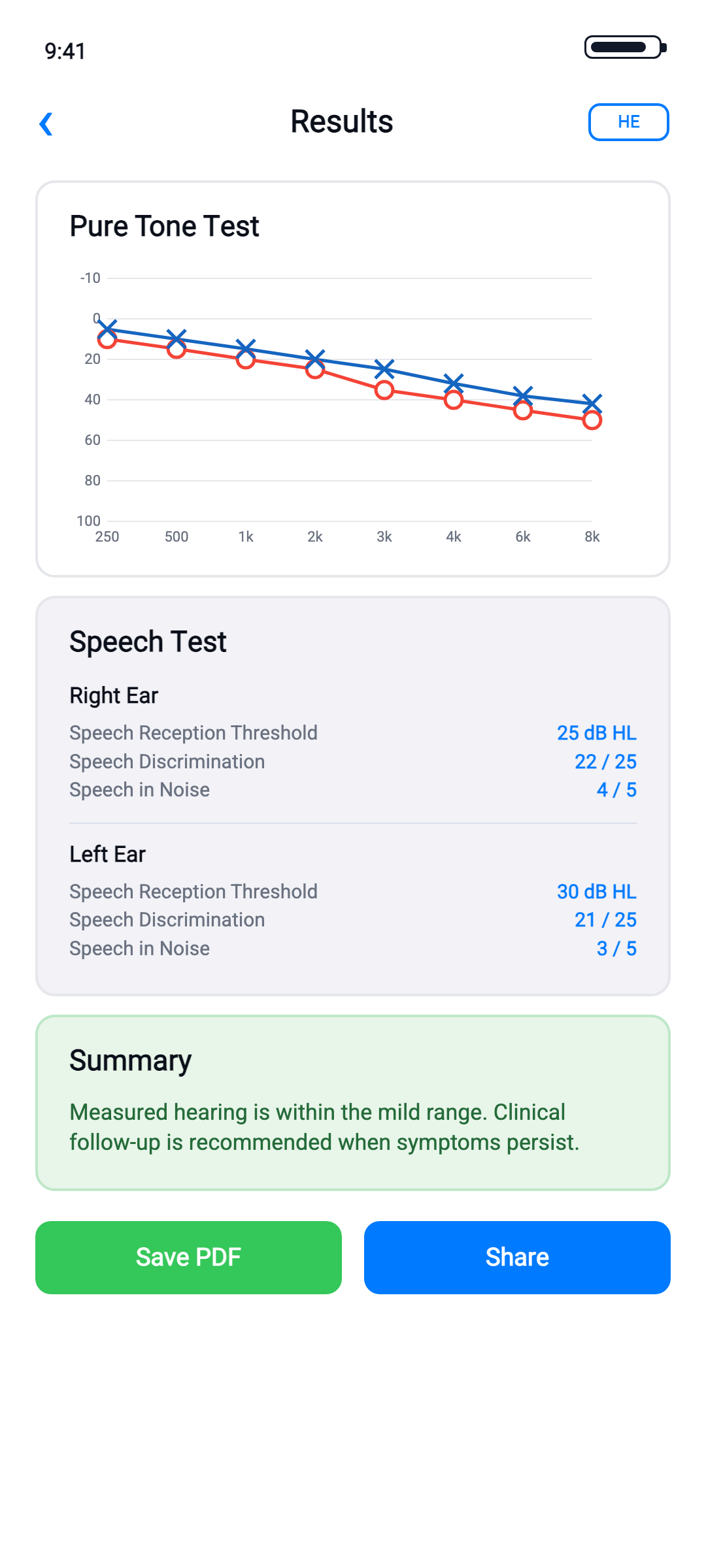
EZTON combines a guided threshold-testing experience, speech-in-noise assessment, accessible result interpretation, referral guidance, and bilingual reports.
Validates the testing environment before measurements begin.
Uses a proprietary setup layer for supported consumer headphone and phone combinations.
Runs pure-tone thresholds and speech-in-noise assessment from the phone.
Generates a Hebrew-English report and flags findings that need professional care.
Real app proof
A restrained product proof strip: one current HearApp screen per test, from tone detection through speech understanding in noise.
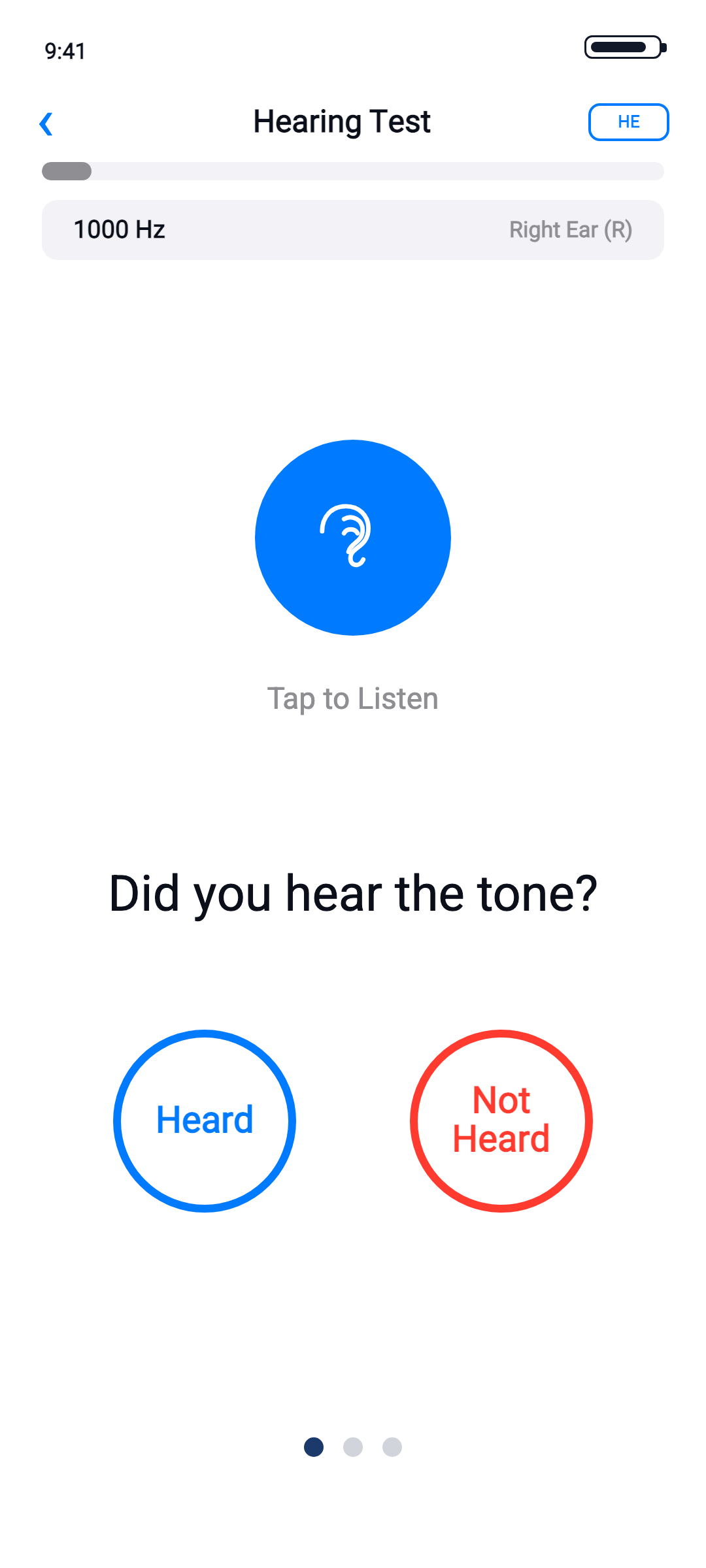
Measures the quietest tones a user detects across frequency and ear.
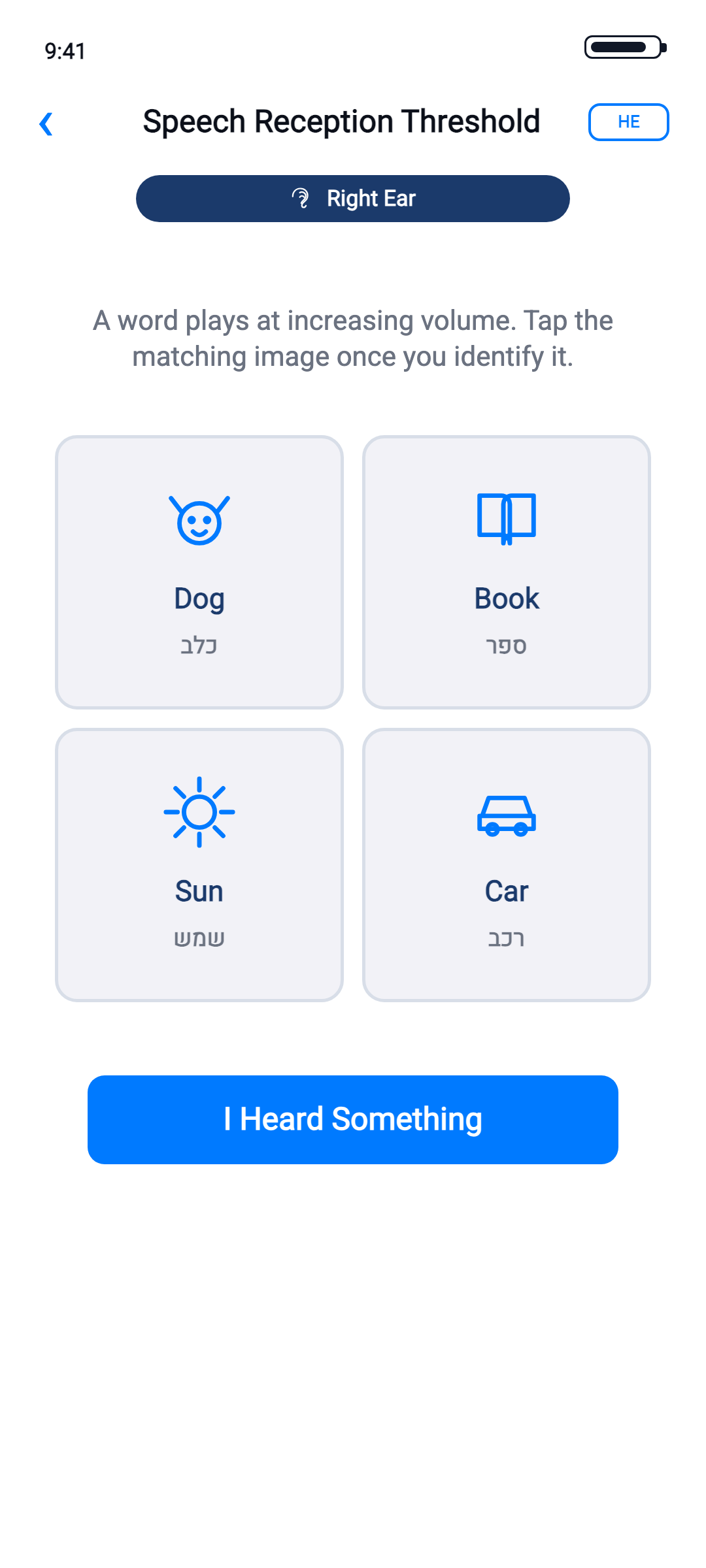
Estimates the speech level at which spoken words become recognizable.
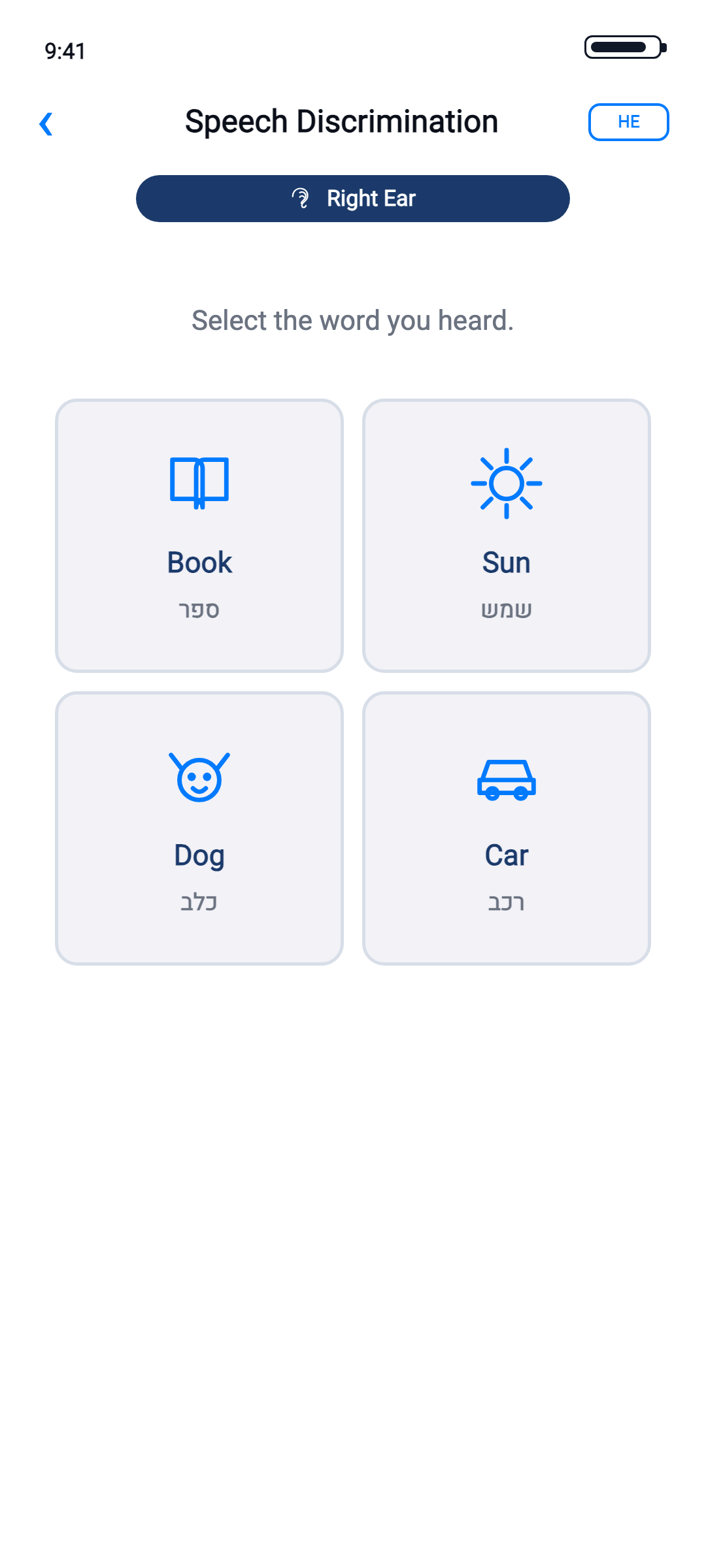
Checks whether audible speech is understood accurately.
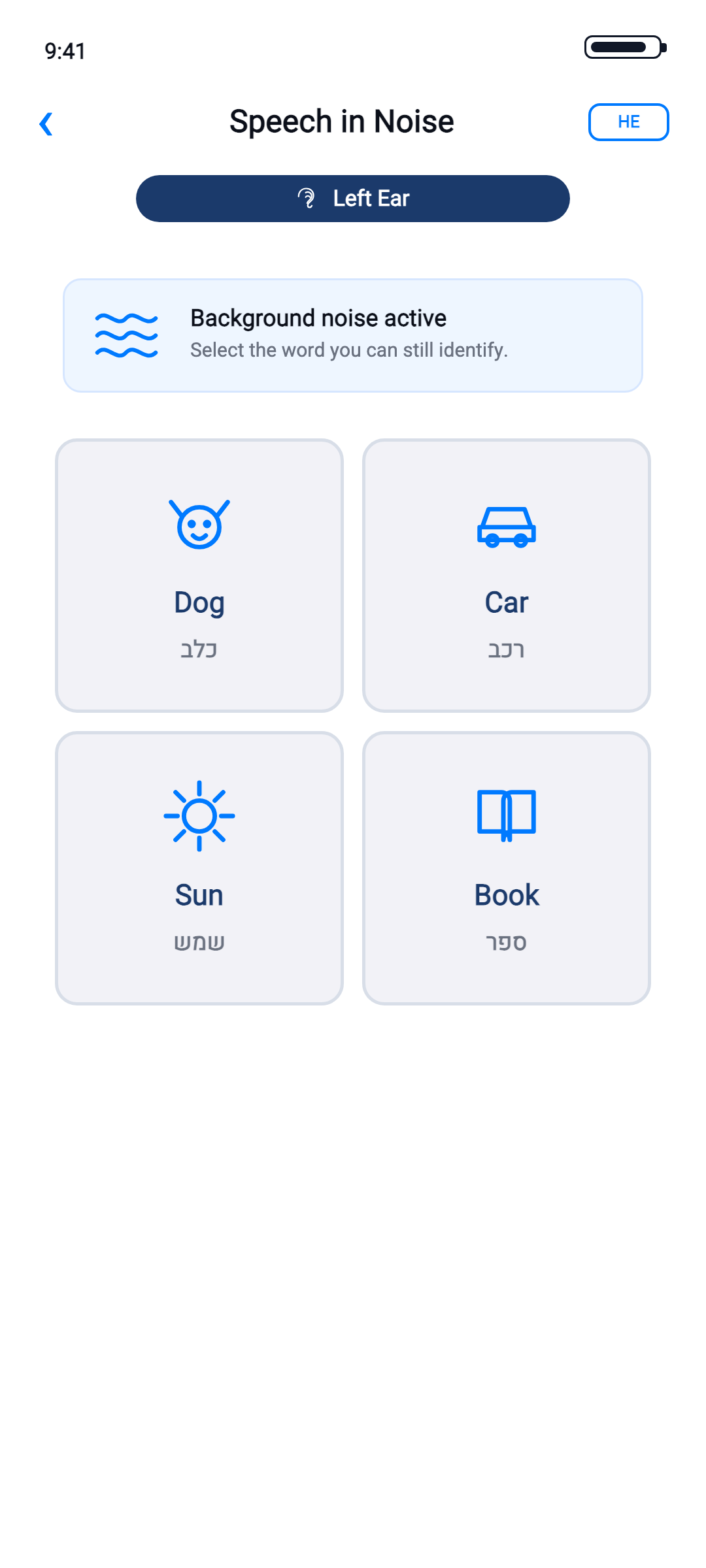
Tests word recognition while background noise is present.
Technology
Designed to reduce variability across supported consumer devices without disclosing the underlying correction method publicly.
Mobile application, production cloud backend, automated report generation, and version-controlled release practices.
Automated classification, plain-language explanations, and referral rules for cases that may require professional evaluation.
Built first for Hebrew-speaking users in Israel, with right-to-left UX patterns, large typography, and a guided testing flow.
Why now
Everyday headphones and phones are now good enough to support more serious screening workflows.
Consumer hearing assessment has market attention, while Android and mixed-headphone users remain underserved.
Patients and providers are more comfortable using telehealth workflows for triage and follow-up.
Evidence and status
EZTON is already deployed, but accuracy claims should remain screening-grade until independent prospective validation is completed.
Feature-complete Android app, live backend, automated reports, and full backend test suite passing.
Initial calibration work has produced a working screening flow and promising early agreement signals.
Detailed study design, sample composition, and raw accuracy results should stay in private materials.
During development, participants were evaluated in a hearing institute using standard clinical hearing tests and reference equipment approved by the Israeli Ministry of Health. EZTON compares app outputs against those clinical reference measurements.
Preliminary testing suggests the approach is worth validating in a formal prospective study.
Independent validation will define the accuracy claim EZTON can responsibly make.
Paying customers, revenue, or external pilot programs claimed today.
Market entry
The first market is Hebrew-speaking users in Israel, where accessibility, language, and follow-up workflows create a focused entry point. From there, EZTON can expand into B2B screening, triage, and referral workflows.
Next phase
Collect structured reference comparisons across representative users and supported device categories.
Use the expanded dataset to strengthen performance across supported real-world conditions.
Measure generalization against predefined accuracy targets using held-out participants.
Clarify wellness versus SaMD positioning and start clinic or telehealth pilots.
The ask
Funding will support the validation program, clinical reference testing, product hardening, regulatory groundwork, and first pilots.